

Introduction
As a mixed race individual I have often battled with my identity. I come from a Greek father and a Chinese mother and I was born in South Africa. I have often struggled with my nationality and my origin. The problem that arises for mixed race individuals like myself is that we are able to understand and multiple aspects of different cultures, but we are never able to become truly respected in each culture we are associated with. In my own experience, I have never truly been accepted as Greek, Chinese, or South African. I don’t fit the part as a traditional Greek individual and in China I am known as a foreigner as multiple people have pointed it out to me. I am most in tune with my South African culture and language, but the problem is that I am not able to fully immerse myself in my nationality because I am often not considered South African by my peers and colleagues. The struggles of being mixed race is hard on a child growing up. Having to not only navigate multiple challenges growing up like puberty, sexual orientation, work, family, relationships and social class, but to also struggle with identity is another problem that many mixed race individuals will face. Mixed race individuals struggle with identification because they are never fully invested into one culture because they are spread out between multiple cultures.
Meaning
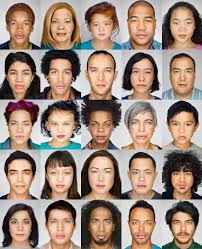
The general idea of a mixed race person is someone who does not have a home. Someone who has no true origin, but can relate to multiple aspects of life at a time. People often forget that mixed race individuals struggle with the idea of not fitting in as well. In an article by Minelle Mahtani , she states that, “ The public imaginary surrounding the ‘mixed race’ person has traditionally been marked by relentless negativity. The popular discourse is made up of a series of myths that explicitly pronounce the ‘mixed race’ individual as ‘out of place’ or having ‘no place to call home’” (Mahtani 470). In this we can see that individuals often are confused as to what they truly are. Ethnicity, race, and nationality are all commingled and there is no true origin for a person of mixed race. Being mixed race also brings multiple negative connotations. For example Tru Leverette states in her writing about being mixed race in the African American community that, “ Thus, many African Americans feel a sense of ancestral sorrow and/or anger over the racial and sexual oppression of enslaved Black women by White men. Because of this, many accept the reality that almost all Americans have “mixed” racial ancestry while they simultaneously reject any claims to or investment in the Whiteness of that ancestry” (Leverette 436). This article shows that many mixed race people in the African American culture often reject their white ancestry because of the struggle and turmoil their black ancestors had gone through. I have always been proud of my multiracial background and based on a study in the U.S 60% of mixed race individuals are proud of their heritage as well. My belief is that the reason people often neglect their mixed race status lies in the sociological aspect of it. Another key statistic to look at is the fact that most mixed race individuals in the U.S come from two different races as 93.29% of mixed race individuals draw their heritage from two separate nationalities. People choose not to identify as a particular race because of past crimes made by a race or the fact that they know that race may reject their claim as one of them causing emotional turmoil to the individual in question.
Family
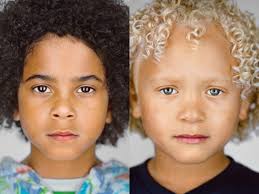
Mixed race individuals not only face public scrutiny from the outside, but face family scrutiny as well. From my experience my parents have always told me to act more in line with a specific culture, but fail to recognize that what seems appropriate for one culture may not fit with another. For instance, my mother constantly tells me that we should greet people with a handshake, but in Greek culture we often go for cheek kisses when we greet new people. This distinction may be miniscule, but is only one of many key differences for a child to realize. Minelle states in the book the Same Difference, “ I initially found myself wholly identifying with the ‘mixed race’ movement because my parents’ ethnic, cultural and class backgrounds were so radically different” (Minelle and Moreno 67). With this comment we can see that having two radically different cultures takes its toll on the child in particular as they are trying to form their own personality in the environment they are in. Not being able to identify with any culture puts a toll on the child in particular and makes it harder for them to adjust to society. Not all of being mixed race is negative. As Milan and Hamm state in the article, “Mixed unions can be seen as ‘an engine of social change’ by fostering positive attitudes toward visible minority groups, and by linking the social and family networks of the two partners” (Mahtani 254). We see that with this mixed race relationships do foster a positive view towards minority groups. I have seen this first hand as my parents have been seen by their friends as a positive new influence into each other’s cultures. As many Greek people do not have exposure to Chinese culture and vice versa. Both have their own cultural differences, but through experience they are able to learn to accept and appreciate the other’s culture. In my own experience as a mixed race individual in South Africa it brings a lot of confusion. Some of my friends in the U.S who have not been to South Africa assumed that I am what an average South African looks like and this couldn’t be further from the truth. I am the minority in every situation and this takes a toll on an individual as you are not able to identify with one group. You are able to get the label, but acceptance is a totally different aspect. Mixed race individuals face multiple problems with stereotypes and some are unique in that it only affects Mixed race individuals. The main question asked to these individuals is what they truly are and I still have a tough time explaining this as well. In the article by Ifekwunigwe she states, “These routine conceptions of ‘race’ and racism are predicated on false notions of purity and alleged ‘racial’ superiority. Contemporary popular folk thinking about ‘race’ and its bedfellow ‘hybridity’ emerged from earlier eighteenth and nineteenth century pseudoscientific debates about ‘race’ mixing as a mode of ‘racial’ degeneration and contamination” (Ifekwunigwe 43). What this means is the idea of racial superiority is when someone who is a descendant from parents who are the same race are superior to those that have mixed race origins. This idea generated from the conception that mixed race children are effectively on half as good as the original and that means that there is a contamination of the gene pool. I think that this idea has been done away with for the most part, but in some walks of life this is still present as many cultures would prefer to marry within their respective groups. The idea may be long passed, but the notion of purity of the gene pool is still present in society.
Personal experience
As for my experience as a South African mixed race, I can’t help, but describe it as mostly positive. South Africa is known as the rainbow nation for a reason. There was major racial discrimination well into the 90’s, but I believe that the leaders like Nelson Mandela have paved the way for acceptance of all cultures in South Africa. I have never felt like I was an outsider in South Africa. A photographer has made it her job to photograph individuals and allow them a space to write what they feel about being mixed race and social identity. Many of my friends back there consider me South African before anything else. Before they notice my Chinese or Greek influence they see me as South African. I feel greatly attached to it because it was my home for so long, but once I came to the United States I found it hard to identify as South African because not many people would see me as South African. Cohen states, “Nature and extent of our differences are crucial, because how we create, interpret, and act in those differences is ultimately what determines the patterns of behavior we see in society” (Cohen 175). Differences help to create our personality. I think that being a mixed race individual has helped me experience so many different things that others may not have. In an article by Mark Ellis he says that, “ The traditional view holds that residential segregation measured at the neighborhood scale as a measure of social or spatial distance or both determines mixed marriage rates: The greater the level of segregation between groups, the lower the rate of marriage between them” (Ellis 552). We see that the greater the segregation between neighborhoods the lower the chance for mix marriages to occur. This means that there would be a lower chance of having mixed race children. The problems arise when this segregation can lead to racism, but the positive result of mixed marriages is the acceptance of other races and nationalities. In an article by Psychology Today they say that biracial people make help to break down racial barriers and establish a greater understanding of race and understanding between different minority groups.
Relationships
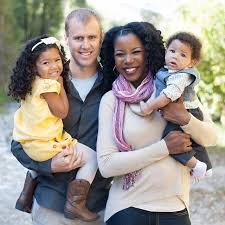
Dating and relationships are particularly difficult for mixed race individuals as trying to find out what you truly are attracted to is difficult. In an article by Silvia Cristina Bettez she records one of her patients who she is studying saying, “There are times when I think, you know, I don’t want to date a white person who’s not going to be aware of those things and live in a little bubble world that doesn’t recognize, you know, where minorities are at. And then I’ve even thought on the other extreme, well I don’t want to date a black man just because I would feel like he was dating me just because I was light skinned” (Silvia 151). We see the struggles of being mixed race here as they are struggling to choose who their appropriate partner should be. I often struggled with this as well growing up in South Africa because I didn’t know what my identity was and I didn’t know who would accept me as me or understand the problems I had growing up. In an article by Roland Fryer he states that, “Throughout history, racial mixing has been taboo, though not completely absent. Fear of interracial mixing was a driving force behind the jim crow system in the U.S. and the south black codes” (Fryer 621). We see that the idea of mixing races has been frowned upon in the past and only recently has it been accepted, but even then it makes it harder for individuals to become comfortable with this. This makes it more difficult for mixed race individuals to date or have relationships as they are not sure as to what they should do because of course there is a social stigma still present and identification is still a valid problem for mixed race individuals, but in the end the individual has choices to make and should take their multiple races as a blessing instead of as a hindrance.
Conclusion
Mixed race individuals struggle with identification because they are never fully invested into one culture because they are spread out between multiple cultures. Being a person of mixed race I often struggle with my identity and feeling a sense of belonging. For every mixed individual there may be some unique circumstances that only apply to them, but as a population there are some things that correlate. Mixed race individuals struggle with identity and feeling a sense of belonging. There are positives to being mixed race as we are able to experience firsthand multiple aspects of a culture and mixed race couples help to destroy racial boundaries that may be present. I believe that in the end the best course of action for mixed race individuals is finding your own personality and self before we try to find a home. Once we understand ourselves we will be more equipped to understand where we belong.
Sources
Cohen, Phillip. The Family. W.W. Norton, 2015.
“Census Scope”http://www.censusscope.org/us/chart_multi.html
Ellis, Mark, et al. “Agents of Change: Mixed-Race Households and the Dynamics of Neighborhood Segregation in the United States.” Annals of the Association of American Geographers, vol. 102, no. 3, 2012, pp. 549–570. JSTOR, http://www.jstor.org/stable/23275543. Accessed 4 May 2020.
Fryer, Roland G., et al. “THE PLIGHT OF MIXED-RACE ADOLESCENTS.” The Review of Economics and Statistics, vol. 94, no. 3, 2012, pp. 621–634., http://www.jstor.org/stable/23261467. Accessed 4 May 2020.
Ifekwunigwe, Jayne O. “Re-Membering ‘Race’: On Gender, ‘Mixed Race’ and Family in the English-African Diaspora.” Rethinking ‘Mixed Race,’ edited by David Parker and Miri Song, Pluto Press, LONDON; STERLING, VIRGINIA, 2001, pp. 42–64. JSTOR, http://www.jstor.org/stable/j.ctt18fsbsq.5. Accessed 3 May 2020.
Latson, Jennifer. “The Biracial Advantage.” Psychology Today, Sussex Publishers, 7 May 2019, www.psychologytoday.com/us/articles/201905/the-biracial-advantage.
Leverette, Tru. “Speaking up: Mixed Race Identity in Black Communities.” Journal of Black Studies, vol. 39, no. 3, 2009, pp. 434–445. JSTOR, http://www.jstor.org/stable/40282571. Accessed 3 May 2020.
MAHTANI, MINELLE, et al. “Exporting the Mixed-Race Nation: Mixed-Race Identities in the Canadian Context.” Global Mixed Race, edited by Rebecca C. King-O’Riain et al., NYU Press, 2014, pp. 238–262. JSTOR, http://www.jstor.org/stable/j.ctt9qg7th.14. Accessed 3 May 2020.
MAHTANI, MINELLE. “What’s in a Name? Exploring the Employment of ‘Mixed Race’ as an Identification.” Ethnicities, vol. 2, no. 4, 2002, pp. 469–490. JSTOR, http://www.jstor.org/stable/23890187. Accessed 3 May 2020.
Mahtani, Minelle, and April Moreno. “Same Difference: Towards a More Unified Discourse in ‘Mixed Race’ Theory.” Rethinking ‘Mixed Race,’ edited by David Parker and Miri Song, Pluto Press, LONDON; STERLING, VIRGINIA, 2001, pp. 65–75. JSTOR, http://www.jstor.org/stable/j.ctt18fsbsq.6. Accessed 3 May 2020.
Moshakis, Alex. “The Mixed-Race Experience: ‘There Are Times I Feel like the Odd One out’.” The Guardian, Guardian News and Media, 26 Aug. 2018, http://www.theguardian.com/artanddesign/2018/aug/26/the-mixed-race-experience-there-are-times-i-feel-like-the-odd-one-out-.
“Overview of Literature on Mixed-Race/Multiracial Students.” Identity Politics of Difference: The Mixed-Race American Indian Experience, by Michelle R. Montgomery, University Press of Colorado, Boulder, Colorado, 2017, pp. 15–48. JSTOR, http://www.jstor.org/stable/j.ctt1vgwb85.5. Accessed 3 May 2020.
Parker, Kim, et al. “Multiracial in America: Proud, Diverse and Growing in Numbers.” Pew Research Centers Social & Demographic Trends Project, 30 Mar. 2020, http://www.pewsocialtrends.org/2015/06/11/multiracial-in-america/.
Silvia Cristina Bettez. “Mixed-Race Women and Epistemologies of Belonging.” Frontiers: A Journal of Women Studies, vol. 31, no. 1, 2010, pp. 142–165. JSTOR, http://www.jstor.org/stable/10.5250/fronjwomestud.31.1.142. Accessed 4 May 2020.

